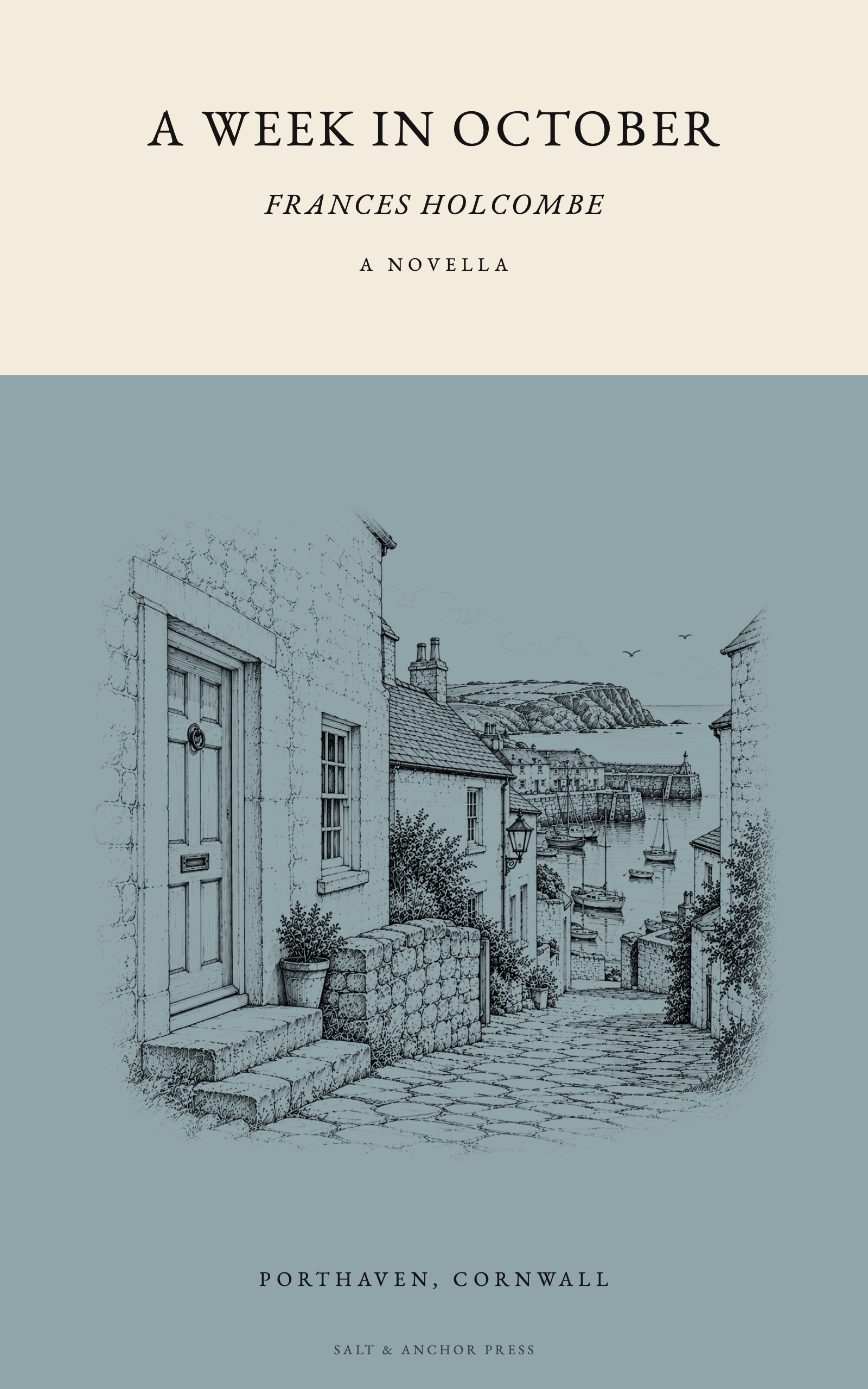
There are places in Britain that seem naturally suited to mystery.
The north Cornish coast is one of them.
Perhaps it is the landscape itself. The cliffs are beautiful, certainly, but they are also dramatic in the truest sense of the word — steep paths vanishing into sea mist, hidden coves below black rock, sudden weather rolling in from the Atlantic with very little warning. Even on bright mornings, there is a sense that the coastline keeps secrets.
That atmosphere matters when writing cosy mysteries.
A good mystery setting should feel comforting and slightly unsettling at the same time. Cornwall does this effortlessly. One moment you are eating warm scones in a harbour café; the next, you are standing on the coast path watching fog swallow the sea entirely.
Places like Padstow, Trevone, and the long stretches of the South West Coast Path have all shaped the feel of Porthaven. Not directly, perhaps, but emotionally. The small harbours, narrow lanes, fishing boats, old pubs, and Atlantic weather all find their way into the books sooner or later.
I think Cornwall also lends itself particularly well to cosy crime because communities here can still feel genuinely local. In smaller coastal towns, people notice things. They know who belongs, whose routine has changed, and when something feels out of place. That awareness creates the perfect conditions for amateur detectives.
And then there is the history.
The north Cornish coast is full of old stories — smuggling tales, wreck legends, abandoned engine houses on distant hillsides, ancient churches perched improbably close to the sea. Even ordinary places can feel layered with memory. As a writer, you never have to force atmosphere onto Cornwall. It is already there waiting for you.
Porthaven may be fictional, but it could only really exist here.
Somewhere between the harbour lights, the salt wind, and the sound of gulls carried inland before rain.